

GHK-Cu, also known as copper tripeptide, is a naturally occurring peptide composed of the amino acids glycine, histidine, and lysine, complexed with copper. It is found in human plasma and tissues and plays an important role in cell signaling, tissue repair, and regenerative processes.
The capsule formulation provides a precisely measured oral research format, offering an alternative to topical or injectable forms commonly studied in laboratory and investigational settings.
How GHK-Cu Works
GHK-Cu functions as a copper transport and signaling peptide, delivering bioavailable copper to cells where it supports essential biochemical processes. Research indicates that GHK-Cu influences cellular activity by:
-
Supporting collagen and extracellular matrix production
-
Modulating inflammatory signaling pathways
-
Promoting cellular repair and regeneration
-
Supporting antioxidant defense mechanisms
-
Influencing gene expression associated with tissue health and aging
These actions contribute to its broad interest across regenerative and cellular research fields.
Potential Research Applications
In research settings, GHK-Cu has been studied for its potential role in:
-
Skin and connective tissue biology
-
Cellular regeneration and repair mechanisms
-
Oxidative stress modulation
-
Hair follicle and scalp research
-
Age-related cellular signaling pathways
Effects are typically gradual and cumulative, aligning with its role in long-term tissue maintenance rather than acute stimulation.
Administration Format
-
Supplied as 2 mg oral capsules
-
Designed for research and investigational use only
-
Capsule format allows for consistent dosing and ease of handling in controlled research protocols
The oral form is studied primarily for systemic signaling effects rather than localized application.
Biochemical Characteristics
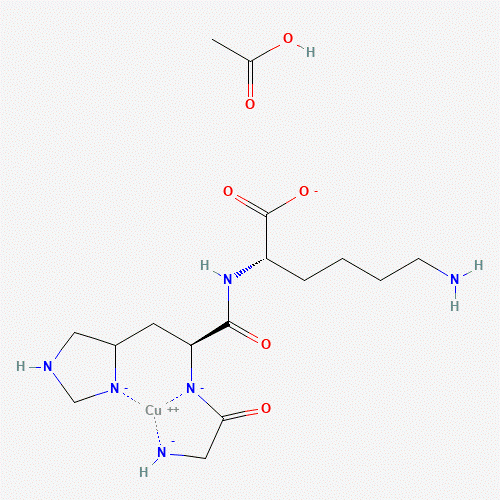
Amino Acid Sequence: Gly-His-Lys(Cu2+)
Molecular Formula: C16H28CuN6O6-2
Molecular Weight: 463.98 g/mol
PubChem CID: 156588903
CAS Number: 49557-75-7
Synonyms: copper glycyl-histidyl-lysine, lamin
 Source: PubChem
GHK coordinates Cu2+ through nitrogen- and oxygen-donor atoms contributed by the glycine N-terminus, histidine imidazole, and lysine-associated functional groups, forming a stable yet exchange-capable complex in aqueous systems. This coordination chemistry is leveraged in laboratory research to study copper partitioning between peptide ligands, proteins, and cellular compartments, as well as copper-dependent catalytic and redox processes under defined experimental conditions.
Research Applications
GHK-Cu is used as a research reagent in mechanistic studies of copper homeostasis and copper-sensitive signaling. Typical preclinical applications include cell-based assays examining oxidative stress response (e.g., ROS handling and antioxidant pathway activation), transcriptional profiling of metal-responsive and inflammatory gene networks, and extracellular matrix (ECM) remodeling readouts (e.g., collagen-associated transcript/protein markers, elastin-associated markers, and matrix metalloproteinase regulation) in fibroblast, epithelial, and endothelial model systems.
In vivo animal studies and ex vivo tissue models employ GHK-Cu to investigate injury-responsive programs such as angiogenesis-associated signaling, immune cell recruitment phenotypes, and remodeling-associated gene expression patterns. In neurobiology-focused preclinical research, GHK-Cu is additionally evaluated as a tool compound for probing the relationship between copper availability and protein aggregation/clearance pathways in controlled experimental contexts.
Pathway / Mechanistic Context
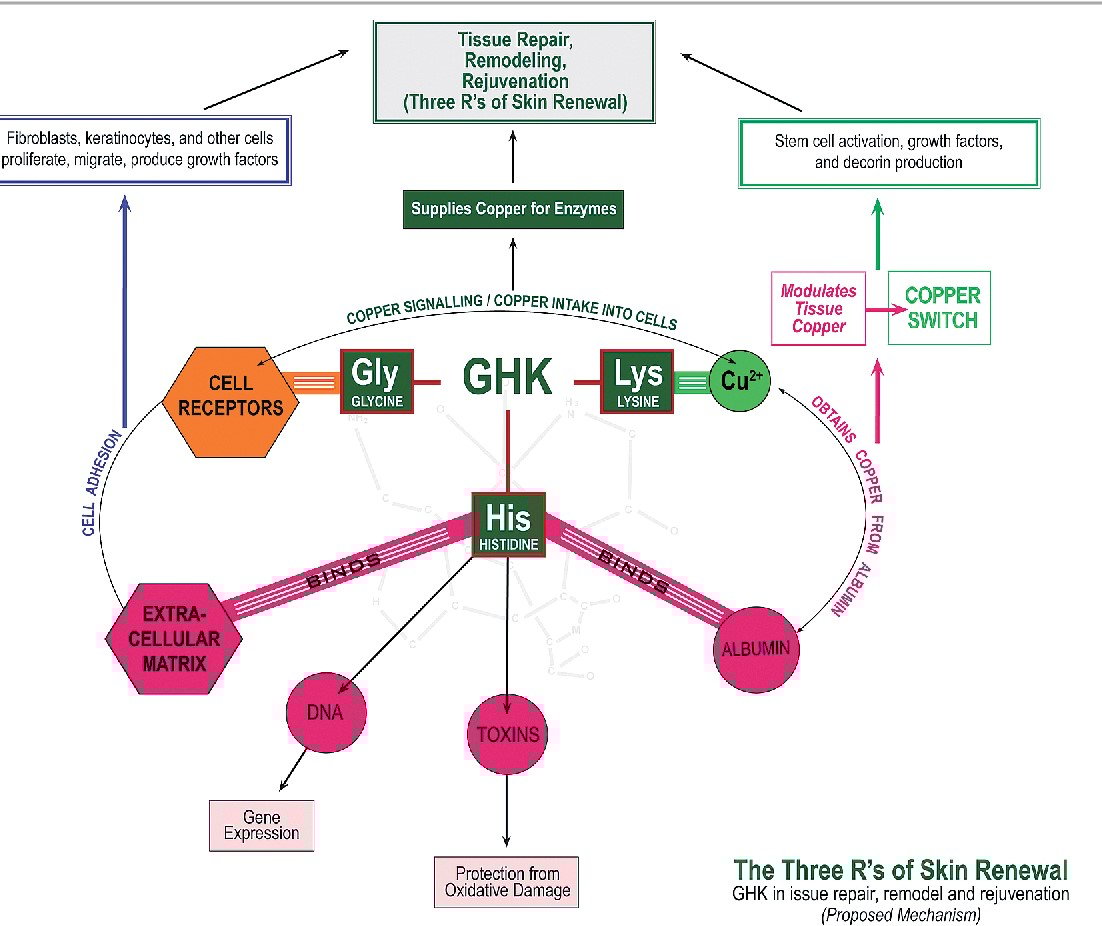
Mechanistically, GHK-Cu is studied as a copper-delivery and copper-buffering complex that can influence copper-dependent enzymes and signaling pathways. Preclinical literature describes modulation of oxidative stress pathways via changes in redox-active copper availability and downstream regulation of antioxidant defenses. GHK-Cu has also been associated with altered activity of inflammatory signaling nodes, including NF-κB–linked transcriptional programs, in cell and animal models.
Gene-expression studies have reported broad transcriptional shifts after GHK-Cu exposure in vitro, including changes in genes associated with DNA repair, proteostasis, and extracellular matrix organization. These observations are used to interrogate how copper-ligand complexes can reshape cellular stress responses and remodeling programs at the transcriptional level, including potential epigenetic contributors to metal-responsive gene regulation.
In protein-aggregation research, copper is a key variable in redox chemistry and aggregation kinetics for several amyloidogenic proteins. Laboratory studies evaluate whether copper sequestration by GHK can modify copper-catalyzed oxidative reactions and aggregation behavior under defined conditions. Such work is framed strictly as mechanistic interrogation of metal-ion contributions to protein misfolding and aggregate formation.
Source: Semantic Scholar
Preclinical Research Summary
Preclinical studies of GHK-Cu include in vitro experiments across fibroblast, endothelial, epithelial, and immune-relevant cell models, as well as in vivo animal studies in which injury-responsive endpoints are quantified. Reported findings commonly include changes in ECM-associated transcription/protein markers (e.g., collagen/elastin-related signals), modulation of inflammatory cytokine signaling (including pathways involving TNF-α and IL-6), and altered oxidative stress parameters consistent with engagement of antioxidant response pathways.
Additional animal-model literature describes changes in angiogenesis-associated signaling and remodeling markers in tissue injury paradigms. Separately, transcriptomic analyses described in the cited literature report that GHK-Cu exposure can shift expression of a substantial subset of measured genes in vitro, supporting its use as a laboratory tool for probing copper-linked transcriptional regulation and downstream pathway enrichment patterns. Research on metal-ion involvement in amyloidogenic protein chemistry has also examined GHK-Cu as a copper-sequestering variable in controlled aggregation and toxicity assay designs.
All summaries above refer only to controlled preclinical investigations and are provided to support experimental design considerations, mechanistic hypothesis generation, and pathway mapping in laboratory settings.
Form & Analytical Testing
GHK-Cu is supplied as a research-grade peptide–metal complex. Identity and composition are commonly assessed using analytical methods such as HPLC for purity profiling and mass spectrometry for molecular confirmation, with copper content/stoichiometry evaluated where applicable using techniques such as ICP-MS/ICP-OES or other validated elemental analysis approaches. UV-Vis or related spectroscopic methods may be used to characterize copper coordination features in solution under defined laboratory conditions.
Researchers should handle peptide–metal complexes using standard laboratory practices appropriate for synthetic peptides and transition-metal coordination compounds, including controls for metal contamination, chelator compatibility, and buffer composition effects on copper speciation during experimental setup.


 (Copper Tripeptide))
Reviews
There are no reviews yet.